

NTP Time Server: LANTIME Stratum 1 Server for all Networks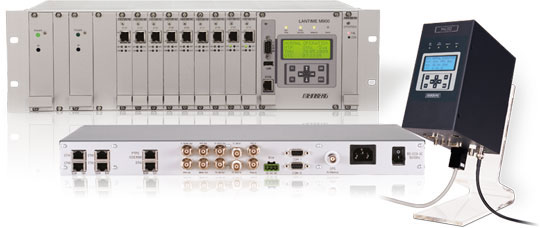
LANTIME is Meinberg’s family of ready-to-run Network Time Protocol (NTP) server appliances, ideal for synchronizing networks of any size. Choose between several different external references sources such as globally available satellite systems GPS, GLONASS, future planned also Beidou and Galileo, Central European DCF77 and IRIG. Even if your desired installation location prevents consistent reception of external signals, our highly stable, free running clocks can be deployed to keep your network in sync. Add our NTP synchronized displays to create a fully-featured time and synchronization solution optimized for environments such as control rooms or operation centers. Overview: NTP Time Server
IMS - LANTIME M4000
Ultra-Versatile Platform for Telecom Synchronization Application The Meinberg LANTIME M4000 has been designed to fulfill the synchronization requirements of modern 4G/5G/LTE networks. It is capable to act as a Primary Reference Time Clock (PRTC) and, because of its unmatched flexibility, can be deployed in different scenarios. The modularity of the IMS platform (Intelligent Modular System) allows the M4000 to be configured for all areas of a mobile backhaul network: in the core, metro or access network areas. 
IMS - LANTIME M3000
Versatile and Modular Time and Frequency Synchronization Platform
The LANTIME M3000 is a field-upgradeable and extremely flexible system, designed to handle synchronization needs today and in the future. The M3000 chassis has slots for four power supplies, two clock modules, a seamless switchover card, a CPU and ten additional input and output modules. With the addition of a second clock module and the required RSC switch module, the M3000 becomes a fully redundant solution for mission critical applications. Up to four power supplies can be installed, increasing reliability and offering protection against the failure of one or more power sources. Both wide range AC and an 20-60 V DC power supply model can be mixed and matched as required by the user, depending upon power supply options available at the installation site. The M3000 is flexible and scalable, accepting a range of input and output modules as well as specialized communication cards for NTP and PTP/IEEE1588 network synchronization and remote management. This adaptable, high performance platform is ideal for long-term deployment, with scalable expansion options that can readily cope with the evolving demands of critical applications. 
IMS - LANTIME M3000S
Modular Time and Frequency Synchronization Platform
Versatile and Modular Solution for Time and Frequency Synchronization Applications in a Compact 3RU Chassis
The new LANTIME M3000S is a field-upgradeable and extremely flexible system that covers your synchronization needs - today and in the future. Upgrading to more outputs, new connector and signal types and protocols is easier than ever with Meinbergs Intelligent Modular Synchronization platform (IMS). The IMS LANTIME S models are an alternative for application environments where a display with function keys is not required for onsite configuration. This allows the S housing variants to be installed in racks which are only accessible from one side. The IMS LANTIME M3000S can be installed in 19 inch racks as well as 21 inch racks (with an adapter). The reduced mounting depth of the S chassis enables you to mount the system in 300mm ETSI racks. As the standard M3000 chassis it comes with four power supply slots, two clock module slots, a seamless switchover card slot, a CPU slot and ten slots for additional input and output modules. Adding a second clock module and the required RSC switch module will turn the M3000S into a fully redundant solution. The up to four power supplies that can be installed offer a high level of protection against the failure of one or more power sources and power supply failures. Both wide range AC and DC power supply models can be mixed and matched as required. The possibility to add input and output modules as well as specialized communication cards for NTP and PTP/IEEE1588 network synchronization (including Synchronous Ethernet support) and remote management ensures that a LANTIME M3000S will fulfill all your synchronization requirements and the scalability and flexibility of the IMS platform concept enables it to cope with the changing demands of your critical applications. All modules support hot plugging, allowing to replace faulty modules or add new capabilities to the system with zero downtime for unaffected modules and functions. 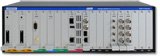
IMS - LANTIME M2000S
Modular Time and Frequency Synchronization Platform in 2U Rackmount Housing
Versatile and Modular Solution for Time and Frequency Synchronization Applications in a Compact 2RU Chassis
The new LANTIME M2000S is a field-upgradeable and extremely flexible system that covers your synchronization needs - today and in the future. Upgrading to more outputs, new connector and signal types and protocols is easier than ever with Meinbergs Intelligent Modular Synchronization platform (IMS). The IMS LANTIME S models are an alternative for application environments where a display with function keys is not required for onsite configuration. This allows the S housing variants to be installed in racks which are only accessible from one side. The LANTIME M2000S chassis can be installed in 19 inch racks as well as 21 inch racks (with an adapter). The reduced mounting depth of the S chassis enables you to mount the system in 300mm ETSI racks. All connections and control elements are placed on one side, allowing to mount this chassis on a wall or inside a rack that is only accessible from one side. The base M2000S chassis comes with three power supply slots, two clock module slots, a CPU slot and six slots for additional input and output modules. Adding a second clock module will turn the M2000S into a fully redundant solution. Up to three power supplies, that can be installed, offer a high level of protection against the failure of one or more power sources and power supply failures. Both wide range AC and DC power supply models can be mixed and matched as required. 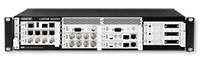
IMS - LANTIME M1000
Time and Frequency Synchronization Platform in 1U Rackmount-Enclosure
The LANTIME M1000 offers high performance time and frequency synchronization in a slim 1U chassis, including slots for two power supplies, two optional clock modules, and a CPU. The flexible M1000 also offers up to four slots for additional input and output modules, or up to three slots in the case of a second reference clock. With the addition of a second clock module and a second power supply, the M1000 becomes a fully redundant solution for mission critical applications. Both wide range AC and a 20-60 V DC power supply model can be mixed and matched as required by the end-use application, depending upon power supply options available at the installation site. 
IMS - LANTIME M1000S
Compact Modular Synchronization Solution - 1U ETSI Rackmount
Versatile and Modular Solution for Time and Frequency Synchronization Applications in 1U housing
The compact 1RU form factor, the hotplugging and hotswapping capabilities and the large selection of different modules for input/output sync signals, network synchronization interfaces and clock modules with different GNSS/radio receiver and oscillator options offer an unmatched reliability, scalability and flexibility. As every Intelligent Modular Synchronization (IMS) system, the M1000S can play almost any role in your synchronization infrastructure: Edge Grandmaster Clock, PRC, PRTC, Secure Sync Gateway, Protocol/Sync Signal Translator and many more. The 1U chassis has two power supply slots, optional two clock module slots, a CPU slot and four (three in case of a second reference clock) slots for additional input and output modules. Adding a second clock module and a second power supply transforms the IMS - M1000S into a fully redundant solution. Both, wide range AC and a 20-60 V DC power supply model can be mixed and matched as required. The IMS LANTIME S models are an alternative for application environments where a display with function keys is not required for onsite configuration. This allows the S housing variants to be installed in racks which are only accessible from one side. 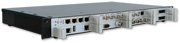
IMS - LANTIME M500
Modular Time and Frequency Synchronization in DIN Rail Mount Chassis
The fully-featured DIN railmount time and frequency synchronization platform incorporates slots for power supply, clock module and CPU; two additional slots handle a range of input and output modules. Models are available with either wide range AC or DC power supply. 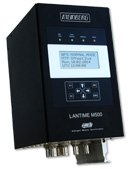
LANTIME M900
Time and Frequency Synchronization in a 3U Chassis
The LANTIME M900 is an NTP time server in a 3U chassis, offering a wide range of time and frequency inputs and outputs for fail-safe synchronization. The M900’s integrated reference clock includes selectable time sources such as GPS, GLONASS, local radio time signals and more, enabling a versatile platform for customized time and frequency synchronization. 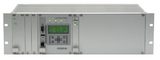
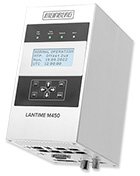
LANTIME M450
For power supply facilities (Substation Automation), industrial applications and automation systems, the LANTIME M450 is an ideal time source for your network environments.
LANTIME M320
NTP Server in 1U Case for Server Rackmount
The Meinberg LANTIME M320 time server is used to provide highly accurate time to networks of all sizes. They synchronise all systems that are either NTP or SNTP compatible. As a reference time source, this NTP system typically use a built-in Meinberg reference clock or a compatible external time source (operating in stratum 1 mode). Up to 7 external NTP servers can also be set as time reference (operation as stratum 2 server).

LANTIME M250
High-Performance NTP Time Server in a Compact Chassis The LANTIME M250 network time server is designed by Meinberg to offer superior NTP server performance in a medium or small sized network environment. Constructed to order with a selection of signal receivers to enable you to synchronize your time server to the remote timing signal that you trust most. Our LANTIME M250 can be built to support timing signals from any of the main satellite navigation systems in operation (GPS, Galileo, BeiDou, GLONASS) or from a long-wave timing signal radio service (e.g MSF or DCF77). 
LANTIME M150
NTP Time Server for DIN Rail Installations The LANTIME M150 time server is designed by Meinberg to offer superior NTP server performance in an industrial environment with a robust rail-mountable chassis. Constructed to order with a selection of signal receivers to enable you to synchronize your NTP server to the remote timing signal that you trust most, the LANTIME M150 time servers can be built to support timing signals from any of the main satellite navigation systems in operation (GPS, Galileo, BeiDou, GLONASS) or from a long-wave timing signal radio service (DCF77). 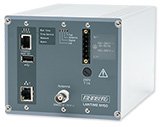
microSyncHR
Powerful IEEE 1588 PTP Grandmaster and High-performance NTP Server With unprecedented levels of efficiency and versatility, the microSyncHR sets new standards for compact yet powerful synchronization solutions. Meinberg's microSyncHR is a feature-rich synchronization device, offering a high level of efficiency and versatility and impresses with its compact design and high port density. 
microSyncRX
Powerful IEEE 1588 PTP Grandmaster and NTP Server in a 19 inch Rackmount Enclosure Meinberg's versatile synchronization solution with redundant power supply, a reliable and universal sync solution for a large range of different industries and applications. Meinberg's microSyncRX is a feature-rich synchronization devices, offering a high level of efficiency and versatility and impresses with high port density and optional redundant power supplies. 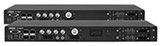
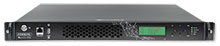
SyncFire 1500
The SyncFire 1500 offers top-of-the-line NTP server performance with no compromises. Constructed to order with an integrated GPS, multi-GNSS (GNS) receiver specially engineered for optimum synchronization performance, the SyncFire 1500 is designed for - and excels in - large-scale environments which rely on a large number of devices having a single common time reference.
LCES
LANTIME CPU Expansion Shelf
An expansion shelf serves as a midpoint connection for additional LANTIME-CPUs with physically separated network interfaces. 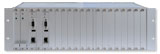
|
 IMS - Modular Synchronization
NTP Time Server
IMS - LANTIME M4000
IMS - LANTIME M3000
IMS - LANTIME M3000S
IMS - LANTIME M2000S
IMS - LANTIME M1000
IMS - LANTIME M1000S
IMS - LANTIME M500
LANTIME M900
LANTIME M450
LANTIME M320
LANTIME M250
LANTIME M150
microSyncHR
microSyncRX
SyncFire 1500
LCES
microSync Product Family
IEEE-1588 Solutions
PC Clocks (PCIe / USB)
GNSS Systems
DCF77 / MSF Systems
IRIG Time Code Systems
Industry Solutions
Signal Distribution
Antennas / Distributors
Displays and Wall Clocks
Meinberg Software
Accessories
Product Range from A to Z
Product Archive
IMS - Modular Synchronization
NTP Time Server
IMS - LANTIME M4000
IMS - LANTIME M3000
IMS - LANTIME M3000S
IMS - LANTIME M2000S
IMS - LANTIME M1000
IMS - LANTIME M1000S
IMS - LANTIME M500
LANTIME M900
LANTIME M450
LANTIME M320
LANTIME M250
LANTIME M150
microSyncHR
microSyncRX
SyncFire 1500
LCES
microSync Product Family
IEEE-1588 Solutions
PC Clocks (PCIe / USB)
GNSS Systems
DCF77 / MSF Systems
IRIG Time Code Systems
Industry Solutions
Signal Distribution
Antennas / Distributors
Displays and Wall Clocks
Meinberg Software
Accessories
Product Range from A to Z
Product Archive